
At a glance
Symptoms
- • Range hood light won't turn on when the switch is flipped.
- • Light flickers constantly or dims unexpectedly during cooking.
- • Visible dark soot or a broken filament inside a glass bulb.
- • One side of a dual-light hood is dark, creating uneven cooktop lighting.
- • You want to upgrade hot, energy-draining halogen bulbs to cooler LEDs.
Common causes
- • Restores safe visibility to your cooktop, preventing cooking accidents and burns.
- • Upgrading to LED reduces heat output, which is especially helpful during hot the Pacific Northwest summers.
- • Prevents electrical arcing in sockets caused by leaving dead, loose bulbs in place.
- • Maintains the aesthetic appeal and functionality of your kitchen lighting.
Safety First — Read Before You Start
- •Always turn off the light switch and unplug the range hood or flip the circuit breaker before working to prevent electrical shock.
- •Allow bulbs to cool completely; halogen bulbs can reach temperatures over 500°F and cause severe burns.
- •Never touch a new halogen bulb with your bare hands; oils from your skin create hot spots that cause premature shattering.
- •Do not exceed the maximum wattage rating printed on the socket or fixture, as this is a serious fire hazard.
Tools & supplies you'll need
- Replacement bulb (GU10, MR16, A19, or LED puck - $5-$35)
- Clean microfiber cloth or cotton gloves (crucial for handling halogens)
- Small flathead screwdriver or plastic pry tool
- Suction cup tool (often included with premium GU10 bulbs)
- Step stool or sturdy chair
- Duct tape (optional, for removing stuck flush bulbs)
Step-by-step instructions
Turn Off Power and Let the Unit Cool
Prioritize safety by cutting power to the hood. Toggle the switch off, and for maximum security—particularly if you suspect a faulty socket—unplug the unit or deactivate the corresponding circuit breaker. If the light was active recently, wait 15 to 30 minutes. Halogen bulbs generate extreme heat and can inflict serious burns if handled too soon.
⚠ Warning: Never attempt to remove a halogen bulb immediately after turning it off. The glass can easily exceed 500 degrees Fahrenheit.
Access the Bulb and Remove the Trim Ring
Depending on your specific range hood, the bulb might be exposed or shielded by a glass lens or metal trim. If a cover exists, use a plastic pry tool or a small flathead screwdriver to gently release the retaining ring. Take care not to mar the stainless steel finish. If necessary, remove the grease filters to gain better access from below.
⚠ Warning: If the trim ring feels stuck, it might be caked with cooking grease. Wiping the edge with a little degreaser can help it slide out easier.
Remove the Old Bulb
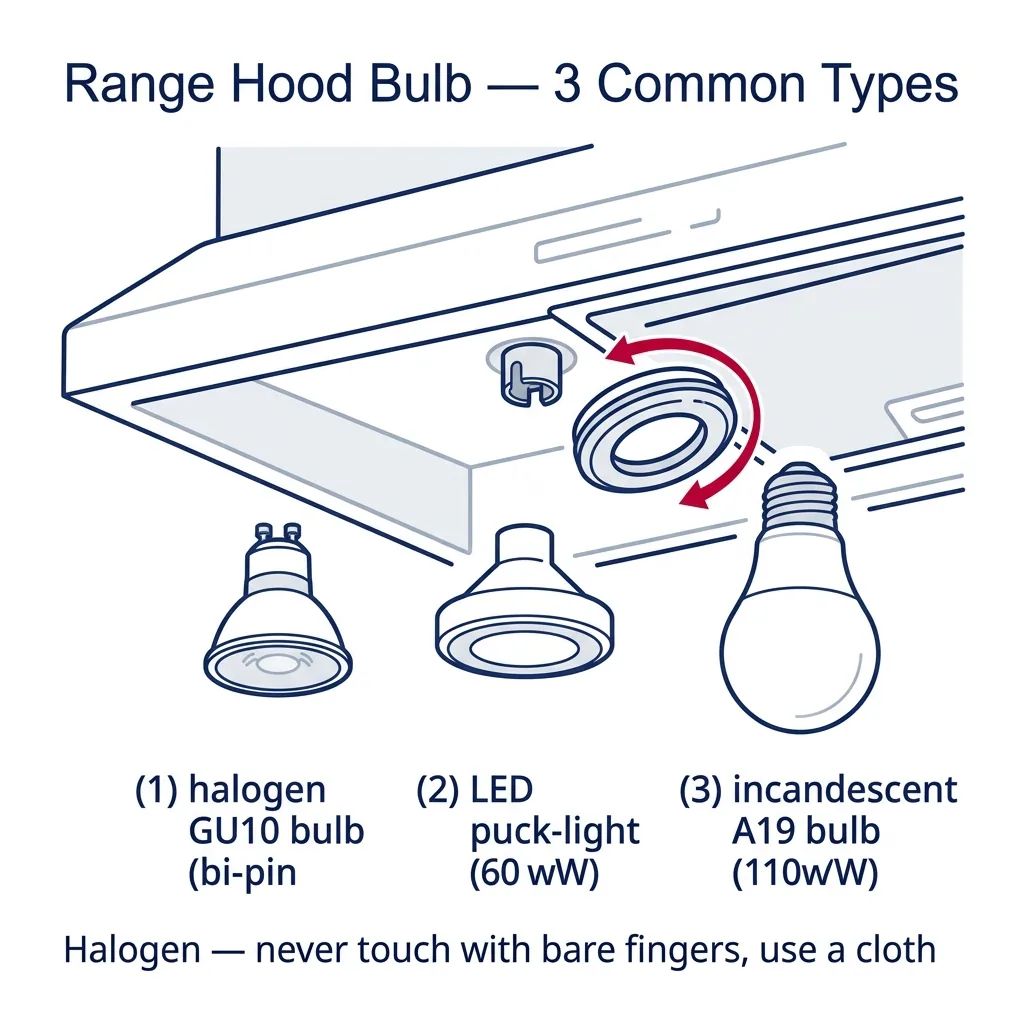
The extraction process varies by bulb type. Screw-in (A19) bulbs require a counter-clockwise turn. For GU10 halogen bulbs (flat face with two thick pins), push the bulb slightly upward, rotate it counter-clockwise a quarter turn, and pull it out. MR16 bulbs (two thin needle-like pins) should be pulled straight out. Proprietary LED pucks might require you to depress spring-loaded clips and disconnect a small wiring harness.
⚠ Warning: If a flush GU10 bulb is stuck and you can't get a grip, press a piece of duct tape onto the glass face, leaving a 'tail' to use as a handle. Push up, twist, and pull down.
Identify and Source the Replacement Bulb
Examine the old bulb for wattage and base details (e.g., 50W GU10 120V, or 20W MR16 12V). If swapping out a halogen, consider switching to a compatible LED. LEDs operate much cooler—a major benefit in warm Pacific Northwest kitchens—and consume less power. Confirm the voltage (12V vs 120V) matches and ensure the bulb is labeled 'dimmable' if your hood includes variable brightness settings.
⚠ Warning: Never install a bulb with a higher wattage than what is printed on the range hood's socket label. This can melt the wiring and start a fire.
Install the New Bulb
When handling halogen bulbs, use cotton gloves or a microfiber cloth to avoid skin contact with the glass. Align the base pins with the socket holes. For GU10, insert and rotate clockwise until it clicks. For MR16, push straight in. For screw-in bulbs, turn clockwise until firm, avoiding over-tightening.
⚠ Warning: If you accidentally touch a new halogen bulb with bare fingers, wipe the glass down with rubbing alcohol and let it dry completely before turning it on.
Reassemble and Test
Once the bulb is seated, replace the trim ring or glass cover. Put the grease filters back if they were removed. Restore power at the breaker or plug the unit back in. Test the light switch, checking both high and low settings if applicable, to ensure consistent operation without flicker.
⚠ Warning: Ensure the light functions correctly across all settings before finalizing the assembly.
Brand-specific notes
Some brands have known design quirks worth knowing about before you start.
Zephyr
Zephyr is known for using proprietary LED puck lights in their newer models. If the whole puck goes out, you usually have to order the specific assembly directly from Zephyr or an authorized dealer (usually $35-$50), as off-the-shelf hardware store bulbs will not fit the housing.
Broan/NuTone
Older Broan units often use standard 40W incandescent appliance bulbs (A19). When upgrading these to LED, make sure the LED bulb is rated for 'enclosed fixtures.' If it isn't, the cooking heat trapped under the hood will quickly fry the LED's internal driver circuit.
Wolf
High-end pro hoods from Wolf often use 50W GU10 halogen bulbs. The trim rings on these can be incredibly tight and flush. Use the small suction cup tool that comes with premium replacement bulbs to grip the flat glass face and twist—it's nearly impossible with bare fingers.
Whirlpool
Many modern Whirlpool and KitchenAid canopy hoods use a specialized 12V halogen or LED system powered by an internal transformer. If you replace the bulb and it still doesn't work, the hidden transformer (which costs about $60-$90) might have blown out and requires replacement.
Samsung
Samsung frequently uses small LED modules that plug into a wiring harness rather than a traditional screw-in or pin bulb. You will likely need to drop the metal baffle filters to access the wiring clip behind the light housing to disconnect the old module.
What our techs see most often
We receive many requests from homeowners who struggle with GU10 halogen bulbs because they forget to twist them into the locked position. Furthermore, for those living in coastal areas like Bellingham or Tacoma, salt-air exposure can corrode bi-pin sockets; applying a small amount of electrical contact cleaner before installing the new bulb can resolve many connectivity issues.
When to call a professional
- → The new bulb flickers violently or immediately burns out, indicating a voltage issue or bad transformer.
- → The light socket is visibly charred, melted, or smells like burnt plastic.
- → The range hood is hardwired and the internal wiring harness has frayed or exposed wires.
- → You have replaced the bulb, but the light switch or control board feels loose, unresponsive, or broken.
- → The hood uses an integrated LED panel that requires disassembling the blower motor housing to access.
Related Range Hood Troubleshooting
These troubleshooting guides cover problems this task can help solve.
Frequently asked questions
Can I replace my hot halogen range hood bulbs with LEDs?
Yes, and it is highly recommended. A 50W halogen can be replaced by a 5W-7W LED, drastically reducing heat in your kitchen and saving electricity. Just ensure the LED is marked 'dimmable' if your hood has multiple light levels, and expect to pay $10-$20 per bulb.
Why did my new halogen bulb burn out in just two weeks?
You likely touched the glass with your bare fingers. The natural oils from human skin bake onto the quartz glass when the bulb heats up, creating a localized hot spot that shatters the filament. Always use a clean cloth or cotton gloves when handling halogen bulbs.
How much does a range hood light bulb replacement cost?
If you DIY, standard incandescent or halogen bulbs cost $4 to $8 each. LED upgrades are $10 to $20. Proprietary LED pucks from premium brands can run $35 to $60. Hiring a pro just for a bulb swap isn't cost-effective, as the minimum service call is usually $120-$150.
The new bulb doesn't work either. What's next?
If a known-good bulb doesn't light up, the issue is usually deeper in the unit. Common culprits include a faulty light switch ($20-$50 for the part), a corroded or burnt socket ($15-$30), or a dead internal transformer ($50-$100) on low-voltage lighting systems.
Need a technician in WA or OR?
If the fix above does not work, A-Fix Service repairs range hoods across Washington and Oregon. $90 diagnostic visit.
Related Repair Guides
Range Hood Light Not Working: Troubleshooting Guide
Struggling to see your stovetop because your range hood light is out? This is a frequent issue for many PNW kitchens. Whether you are dealing with a simple bulb burnout, grease-clogged controls, or a transformer failure, this guide will walk you through the diagnostic process safely.
How to Clean a Range Hood Grease Filter
Keep your kitchen air crisp and your ventilation system efficient. Cleaning your range hood filter is a quick, manageable task that prevents motor strain and keeps your home smelling fresh.
Troubleshooting a Range Hood Fan That Won't Run
If your range hood lights are operational but the exhaust fan refuses to spin, you are likely dealing with a localized circuit failure. Because the lighting and fan motor systems often share a power source but utilize independent control paths, the issue usually boils down to a faulty switch, a failed capacitor, a worn-out motor, or a glitchy control board. Most of these repairs can be completed for under $80 in parts.